


Take Control With RFID Asset Tracking
RFID asset tracking is transforming how businesses see, control, and move assets and stock — delivering real—time visibility without the manual effort. By using smart tags and fast, accurate readers, organisations can identify assets instantly, track movement automatically, and remove the blind spots that slow operations down.
And this is exactly where TSC’s RFID solutions come in. TSC doesn’t just offer RFID printers — they support connected identification ecosystems which combine hardware, software and services. From encoding and verification to mobile data capture and integration, TSC gives businesses everything they need to tag, track and manage assets with confidence.
In the sections ahead, we’ll discover the full RFID asset tracking journey — from creating tags to capturing data in motion — and show how TSC technology brings it all together. You can also find helpful media guidelines for creating RFID asset tracking tags.
What is RFID Tracking Technology
Radio Frequency Identification, also known as RFID, is an innovative technology that helps to identify and keep track of objects, or even people and animals, using invisible radio waves. But how does it track assets, and why is this important for asset management?
While RFID asset tracking unlocks powerful automation, barcodes remain an essential identification technology for many organisations. It’s simple, universal, cost effective and ideal for high volume retail and logistics workflows.
Many businesses combine barcode and RFID asset tracking technology depending on their processes, budget and long term strategy — using barcode asset tracking for everyday asset scanning, whilst deploying RFID for faster counts, movement tracking and live visibility.
How RFID Asset Tracking Works
RFID tracking works on a simple idea: the RFID reader asks, the tag answers, and the system updates automatically.
Each RFID asset tracking tag, or smart label, carries a tiny piece of information. When RFID readers send out radio signals, the tiny antenna inside picks it up, and any nearby tag “wakes up” and replies with its ID. That response is captured instantly and turned into usable data — no manual scanning or checking required.
What Are the Advantages of Asset Tracking With RFID Technology
RFID asset tracking brings some significant workflow improvements to asset and inventory tracking systems. Here are a few key benefits it offers:
- Faster stock counts and cycle counting
- Reduced human error
- Improved real-time asset visibility
- Lower operational and labour costs
This turns asset tracking into a calmer, faster, effortless workflow where everything is visible and nothing gets missed.
Why RFID Asset Tracking is the Future of Inventory Management
RFID Asset Tracking is considered the future of inventory management due to its unparalleled accuracy and efficiency. By utilising RFID technology, businesses can track their inventory in real-time, reducing manual errors and improving overall operational processes. RFID systems allow for automated data collection, leading to more streamlined inventory management practices.
This level of encoding accuracy also underpins the shift toward next—generation identification standards — including GS1 Digital Link, Sunrise 2027 and the EU Digital Product Passport. Each of these frameworks relies on highly reliable, consistently encoded data to carry richer product information, enable automated verification, and support full lifecycle traceability.
By ensuring every tag is written and validated correctly, your RFID workflows stay fully aligned with these emerging requirements, making your asset identification future—proof across retail, logistics, manufacturing and sustainability reporting.
How Much Will Implementing RFID Infrastructure Cost?
RFID asset tracking may require some initial investment in infrastructure and equipment, but the long-term benefits far outweigh the costs. It allows businesses to efficiently track and manage their assets, saving time and money in the process.
That's why its crucial to carefully assess your specific needs and budget constraints before embarking on RFID implementation. By implementing RFID technology, companies can streamline their operations and improve overall productivity. So, while there may be some upfront expenses, the return on investment can be well worth it in the end.
How To Use RFID For Tracking Assets
RFID asset tracking follows a simple, repeatable journey: you create a digital identity for each item, automatically capture its movements, and build a live picture of where everything is. It’s a clear, end—to—end flow that turns manual checks into effortless, automated visibility.
Below, we’ll break down that journey step by step — from printing and encoding tags to tracing assets as they move through your operation.
Printing Tags For RFID Asset Tracking System
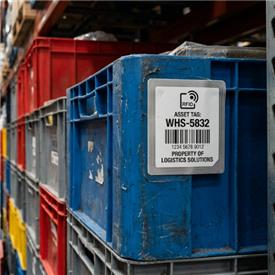
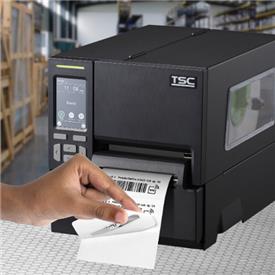
Creating an RFID tag begins by giving each item a unique digital identity. The RFID tracking chip, found within the RFID label, is encoded with ID by the printer, pairing machine—readable records with a human—readable marker.
An RFID asset tracking label can carry barcodes, logos, serial numbers and more — it varies by environment. Hospitals often use non-metal labels to prevent signal interference, while warehouses, retailers, and manufacturers may require a variety of options, ranging from simple paper tags to durable synthetics or metal—mounted designs.
That’s why printer choice matters. IT teams need hardware that supports today’s label constructions and tomorrow’s, without downtime or forced upgrades. TSC’s RFID printers deliver flexibility, reliably encoding across a wide range of materials, including challenging on—metal formats.
Don’t forget to download the TSC RFID Media guidelines below.
RFID Tag Commissioning
Commissioning is the step where an encoded RFID label becomes a live asset in your system. The EPC (Electronic Product Code) written at the printer is captured, linked to the item’s details, and activated in your asset database.
TSC printers support read—after—write verification, meaning they code the RFID chip, instantly read it back and compare it to the intended data before printing. Bad tags are automatically flagged and skipped, so only verified labels enter your workflow.
Tracking RFID Tagged Assets in Warehouses, Logistics Hubs and Other More
The next step in your RFID tracking systems is capturing assets as they move throughout your operations.
For stationary workplaces, RFID asset tracking readers are installed at key points, such as doorways, loading bays and packing benches. The aim is to reduce manual intervention by using fixed-position RFID tracking devices that automatically detect asset tags as they pass by, even if they’re concealed within packaging, and log the event.
Alternatively, RFID-equipped handheld devices can be used to locate inventory and other assets that may be tucked away and out of sight. They let staff walk through stockrooms, warehouses, offices or field sites and scan hundreds of tagged items in seconds, without line—of—sight or manual barcode checks. That means faster cycle counts, quicker audits, and dramatically reduced labour time. Many mobile computing devices can be converted into portable RFID tracking solutions by adding
RFID For Asset Tracking On The Move
Mobile computers with integrated RFID readers or sled attachments bring tracking out of fixed zones and into the real world. Users can still track RFID tags while walking through transport routes, loading bays or warehouse aisles, giving instant visibility wherever assets actually are.
This mobility makes dispatching, transporting and receiving far smoother. Teams can verify loads, confirm deliveries, locate missing items and handle exceptions on the spot — turning RFID into a flexible, human—powered layer that fills the gaps between fixed readers.
Additionally, mobile RFID printers support on—the—go, error—free tagging without relying on fixed workstations.
TSC RFID Tracking Technology Equipment
TSC’s long proven RFID printing legacy delivers accurate, verified encoding every time, whilst their Bluebird mobile readers and sleds extend that same reliability into any environment. By bridging the gap between data capture and operational execution, TSC enables teams to tag, scan, and verify assets no matter where their work takes place.
RFID Label Printers
- T6000e Industrial — Heavy duty, high speed RFID asset tracking tag printing within big warehouses and manufacturing lines.
- TH240R Desktop — Simple, compact desktop RFID printer for SMEs and everyday tagging.
Bluebird Enterprise Mobile Computers, Sleds and RFID Readers From TSC
- Bluebird S10 RFID Handheld — All—in—one mobile computer with integrated RFID for fast, flexible on—the—go asset tracking.
- Bluebird RFR901 Fixed Position — Fixed reader for automated checkpoint RFID tracking systems at doors, bays and benches.
- Bluebird RF901 Handheld Sled — High performance RFID sled that turns mobile devices into powerful handheld readers.
Move Your RFID Journey Forward
If you’re looking to turn RFID asset tracking into real operational gains, ERS and TSC have the tools and expertise to make it happen. Get in touch and let’s build an RFID asset tracking solution that fits your workflow.
There’s also a handy media guide below which supports the RFID tagging process with compatible TSC printers.